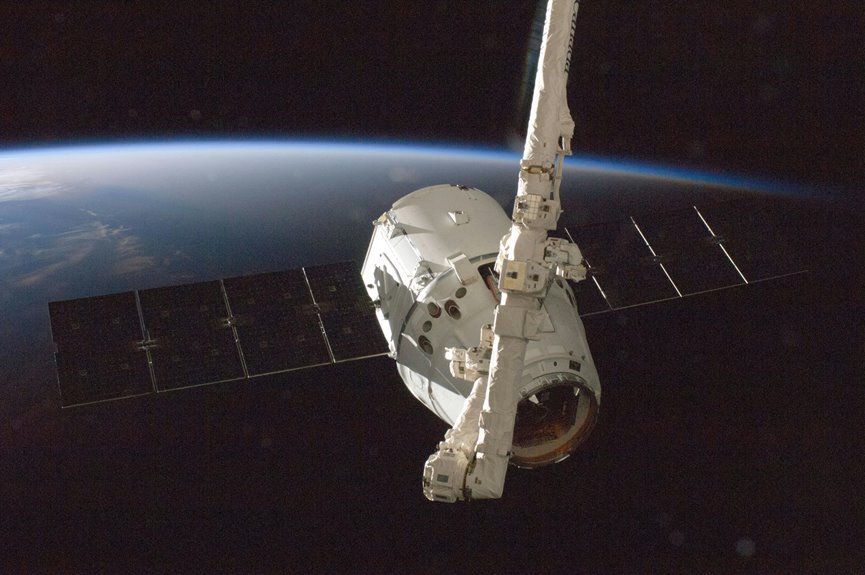
Hypernova Beam 919973519 presents a critical case in the study of stellar collapse dynamics. Its explosion reveals intricate interactions between gravitational and kinetic forces, resulting in accelerated material trajectories. These movements not only dictate the hypernova’s evolution but also affect nearby celestial bodies. Understanding these phenomena may provide insights into broader cosmic processes. Further investigation into these dynamics could uncover significant implications for the evolution of the surrounding cosmic environment.
Understanding Hypernovae and Their Significance
Hypernovae, a rare and powerful class of stellar explosions, represent a critical phase in the life cycle of massive stars.
Their cosmic significance extends beyond mere luminosity; they contribute to nucleosynthesis, dispersing heavy elements throughout the universe.
This process enriches interstellar matter, fostering the formation of new stars and planetary systems, thus playing an essential role in the evolution of the cosmos.
The Unique Dynamics of Growth Orbit
The intricate dynamics of growth orbit within hypernovae exemplify the complex interplay of gravitational and kinetic forces during stellar collapse and explosion.
This phenomenon involves rapid growth acceleration influenced by orbital mechanics, where material ejected at high velocities interacts with surrounding debris.
Such interactions establish unique trajectories, shaping the aftermath of the explosion and influencing the broader cosmic environment significantly.
Implications for Nearby Celestial Bodies
While the effects of hypernova explosions primarily manifest within their immediate vicinity, their implications for nearby celestial bodies extend far beyond mere proximity.
Cosmic radiation emitted during such events can influence stellar evolution, potentially altering the chemical composition and trajectory of surrounding stars and planets.
These interactions may precipitate significant shifts in the dynamics of celestial systems, reshaping their evolutionary pathways.
Future Directions in Astronomical Research
Recent studies have highlighted the profound influence of hypernovae on surrounding celestial bodies, prompting a reevaluation of research priorities within the field of astronomy.
Future directions may include investigating the correlation between hypernovae and dark energy, as well as their role in cosmic inflation. Such inquiries could enhance understanding of universal expansion, offering insights into fundamental cosmic processes and the intricate interplay of astrophysical phenomena.
Conclusion
In conclusion, Hypernova Beam 919973519 serves as a pivotal case study in stellar dynamics, illustrating the profound impact of hypernovae on cosmic evolution. As the adage goes, “Actions speak louder than words,” reflecting how the explosive forces at play not only reshape the hypernova’s trajectory but also reverberate through the surrounding celestial environment. Future research will undoubtedly deepen our understanding of these complex interactions, enhancing our grasp of the universe’s intricate tapestry.